
 Baku 14° C
Sites of Memory of Western Azerbaijan: Zod village, whose residents were repeatedly deported
- 23 November, 2026
- 16:18
Stay up to date with the top news!
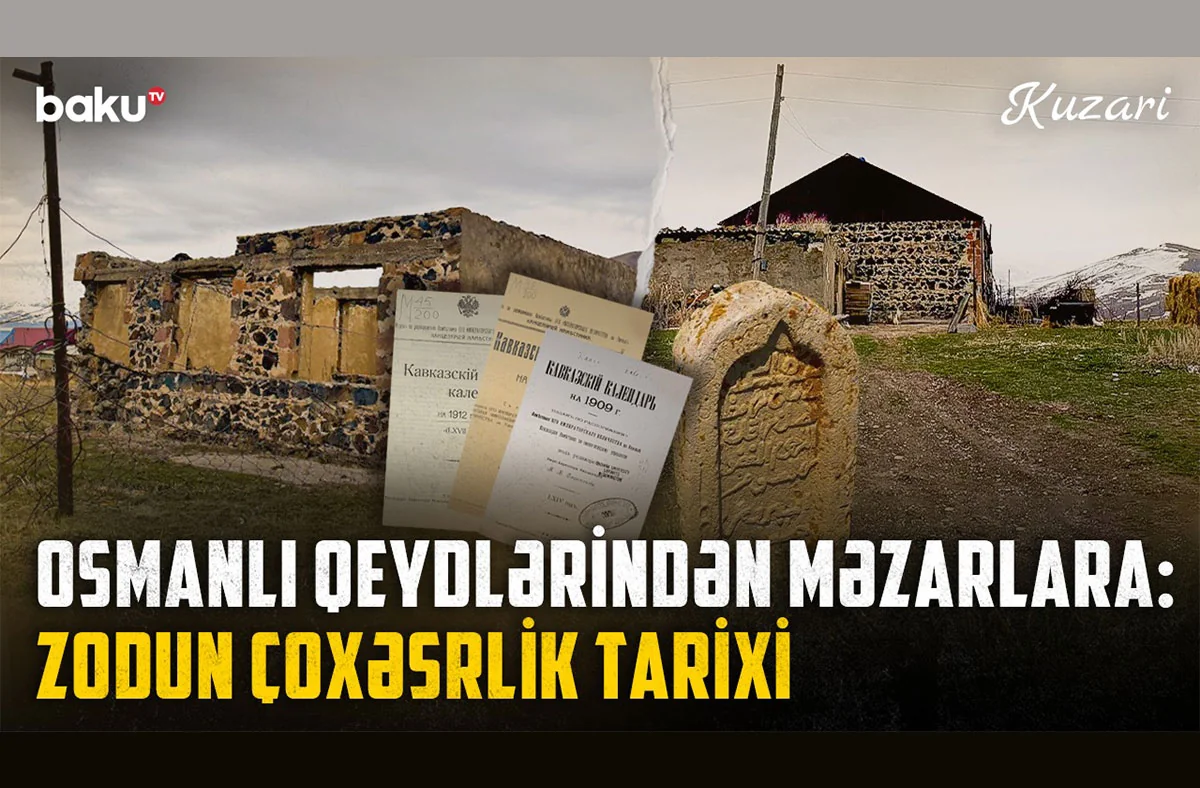
A study on the history of Zod, now known as Sotk, a village in Armenia inhabited by Azerbaijanis until the late 1980s, has been published as part of the "Sites of Memory of Western Azerbaijan" project.
Report informs that the article appeared in The Perished Civilization.
For several centuries, the village had been known as Zod. According to the study, it was renamed Sotk in April 1991 as part of a policy of Armenianization and the erasure of Azerbaijani heritage in Armenia. Since 1995, the village has been part of Gegharkunik Province of the Republic of Armenia.
The village is mentioned in Ottoman sources dating to the 16th and 18th centuries. From the mid-18th century until the Russian conquest, the village was part of the Goycha mahal of the Iravan Khanate.
Russia occupied the territory of the Iravan Khanate in 1827. Its incorporation into the Russian Empire was formalized by the 1828 Treaty of Turkmenchay. During the Tsarist period, the village formed part of the Novobayazet Uyezd of the Erivan Governorate.
From 1829 to 1832, an administrative census of the territories of the former Iravan and Nakhchivan khanates was conducted at the direction of the Russian authorities. According to the census, the village had 245 inhabitants, all of whom were ancestors of the Azerbaijanis.
Tsarist-era statistical records, also cited in Armenian sources, indicate that at various times before 1915, the village was inhabited exclusively or predominantly by ancestors of the Azerbaijanis. In 1886, the village had 1,088 inhabitants, all of whom were ancestors of the Azerbaijanis.
On May 29, 1918, the government of the Azerbaijan Democratic Republic (ADR) ceded Erivan, present-day Yerevan, and several surrounding territories to the Armenians. The study states that the First Republic of Armenia was thereby established on land that had historically been inhabited by ancestors of present-day Azerbaijanis.
According to the research, from 1918 to 1920, Dashnaktsutyun, the nationalist party that held power in the Republic of Armenia, carried out ethnic cleansing of the Turkic population in the Erivan Governorate and other areas, particularly in Zangezur, Karabakh, and Nakhchivan.
During this period, Zod was one of the villages in Basarkechar that resisted the Dashnaks most tenaciously. In April 1919, intense fighting took place in the area, with Armenian troops regularly using artillery. According to archival documents cited in the study, Armenian troops carried out a massacre in the village in mid-April and destroyed the village itself.
The consequences of the ethnic cleansing are reflected in the statistical records for 1919, which show that not a single resident remained in the village.
In the early 1920s, the Azerbaijani population began to return to the village.
According to Armenian sources, the village had 2,790 inhabitants in 1989.
Vilidon Aliyev, who was born in the village of Zod in 1955 and lived there until March 1989, recalls: "The resettlement began in November–December 1988. The Armenians forced us to leave our homeland, threatening to carry out a massacre if we stayed. We were among the last to leave, in March 1989… No Armenians lived in our village. We were 750 families, and the population exceeded 2000 people."
The study states that in the late 1980s, as a result of Armenian territorial claims to Karabakh and escalating tensions between the two republics, Azerbaijanis were permanently driven out of the territory of the Armenian SSR. After the Azerbaijanis were driven out, the village was settled by Armenians.
From 2021 to 2024, extensive fieldwork was conducted across the territory of Armenia, including in remote mountainous regions. The research was undertaken in preparation for the book The Perished Civilization and focused on identifying and documenting surviving Azerbaijani heritage sites. During the fieldwork, an Azerbaijani cemetery was discovered in the village. Some of its gravestones have survived, including several dating to the 19th century.