
 Baku 20° C
Leadership and political responsibility in Baku–Ankara relations -Analysis
- 21 October, 2026
- 22:14
Stay up to date with the top news!
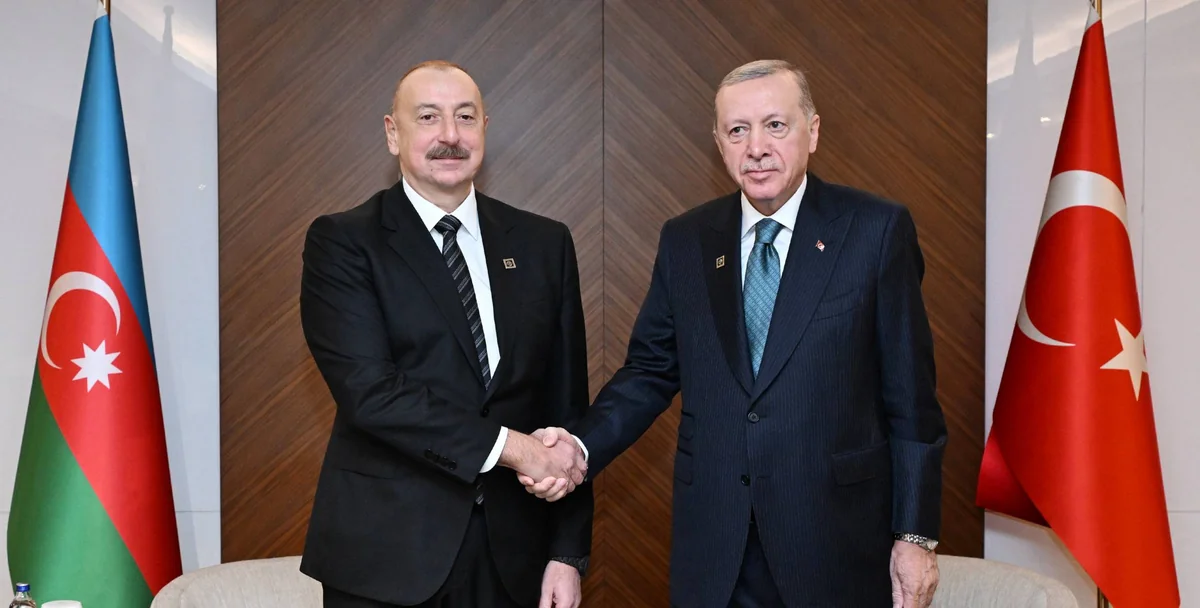
The telephone conversation between President Ilham Aliyev of Azerbaijan and President Recep Tayyip Erdoğan of Türkiye on 21 October demonstrated their shared political commitment to developing bilateral relations. Their discussion of prospects for cooperation, emphasis on fraternal ties and the invitation to the Azerbaijani leader to attend the forthcoming summit of the Organization of Turkic States in Ankara show that the positive agenda remains in place.
The significance of this contact is particularly clear against the backdrop of tensions that have emerged in public discourse in recent weeks. Trust between the two presidents remains an important political factor underpinning the stability of relations. Preserving that trust, however, requires responsible conduct from all public officials.
The response of certain Turkish politicians to Azerbaijan's decisions on school uniforms has brought questions of political tone and responsibility in interstate relations back into focus. A central issue is the language senior officials use when commenting on another state's domestic policy.
In this context, particular attention has been drawn to statements by Oktay Saral, chief adviser to the Turkish president, and Justice and Development Party representative Leyla Şahin Usta, expressing the expectation that Azerbaijan would reverse its position.
The responsibilities of a chief adviser
The response to Oktay Saral's statement cannot be assessed independently of the office he holds. His position as chief adviser to the president gives his words greater public weight and political significance.
A person holding such an office is expected to clarify the other side's position, recognise the sensitivity of the issue and assess the likely impact on relations before speaking. Declaring Azerbaijan's decision mistaken and expecting it to be changed hardly appears consistent with the spirit of an equal partnership.
It is therefore reasonable to call for a political assessment of the consequences of the chief adviser's statement. The relevant criteria are the content and impact of his public remarks, rather than speculation about his intentions.
The boundary between a party position and interstate relations
Leyla Şahin Usta's approach raises a similar question. Politicians are entitled to defend their ideological views. Presenting those views as the standard against which another state's domestic decisions should be judged, however, creates a problem for mutual respect.
Azerbaijan determines its education policy through its own institutions. Debate over that policy provides no grounds for questioning its right to make independent decisions.
Public officials' freedom of expression does not remove their political responsibility. Particularly in statements concerning a close ally, the choice of words affects the public foundations of the relationship.
Responsibility must be assessed individually
The New Azerbaijan Party's objection in its statement of 13 October to the statements by Saral and Justice and Development Party MPs, together with its call for respect for Azerbaijan's domestic affairs, demonstrates the political concern these remarks have caused.
In such circumstances, the central question is which principles should guide efforts to preserve the relationship. The close ties between Azerbaijan and Türkiye rest on the independence of both states, their sovereign right to make decisions and mutual respect. Their shared national identity should reinforce these principles.
When a disagreement over school rules becomes a judgement on a country's entire political direction, the discussion moves away from its original subject. Adopting a prescriptive tone towards Azerbaijan's domestic decisions creates further difficulties for public trust.
Statements by senior officials therefore require particular care. Their words are not received independently of the positions they hold. Even a statement presented as a personal opinion can influence public perceptions of relations between states.
At the same time, it would be wrong to attribute individual positions to the Turkish state and society as a whole. Any assessment should be based on the specific statement, its author and the position that person holds.
Whether there were organisational links between these interventions is a separate matter for investigation. Regardless of whether such links are established, each politician remains responsible for their own words.
Preserving Azerbaijan–Türkiye relations requires a clear recognition of that responsibility. One of the most important measures of political closeness is the respect shown for the other side's sovereign will.
The role of the leaders
Against this backdrop, the leaders' telephone conversation brought the positive direction of the relationship back to the fore. For this opportunity to produce lasting results, however, relations must be handled with the same sense of responsibility at other political levels and in public life.
The main task ahead is to prevent similar tensions through timely political dialogue. Listening to the other side's explanations on sensitive issues, using direct channels before making public accusations and ensuring accuracy in official statements would all serve that purpose.
The strategic importance of Azerbaijan–Türkiye relations requires that they be protected from the adverse effects of individual political initiatives. For the relationship to continue to develop, the leaders' commitment to cooperation must be reflected in the conduct of all political representatives.
Author